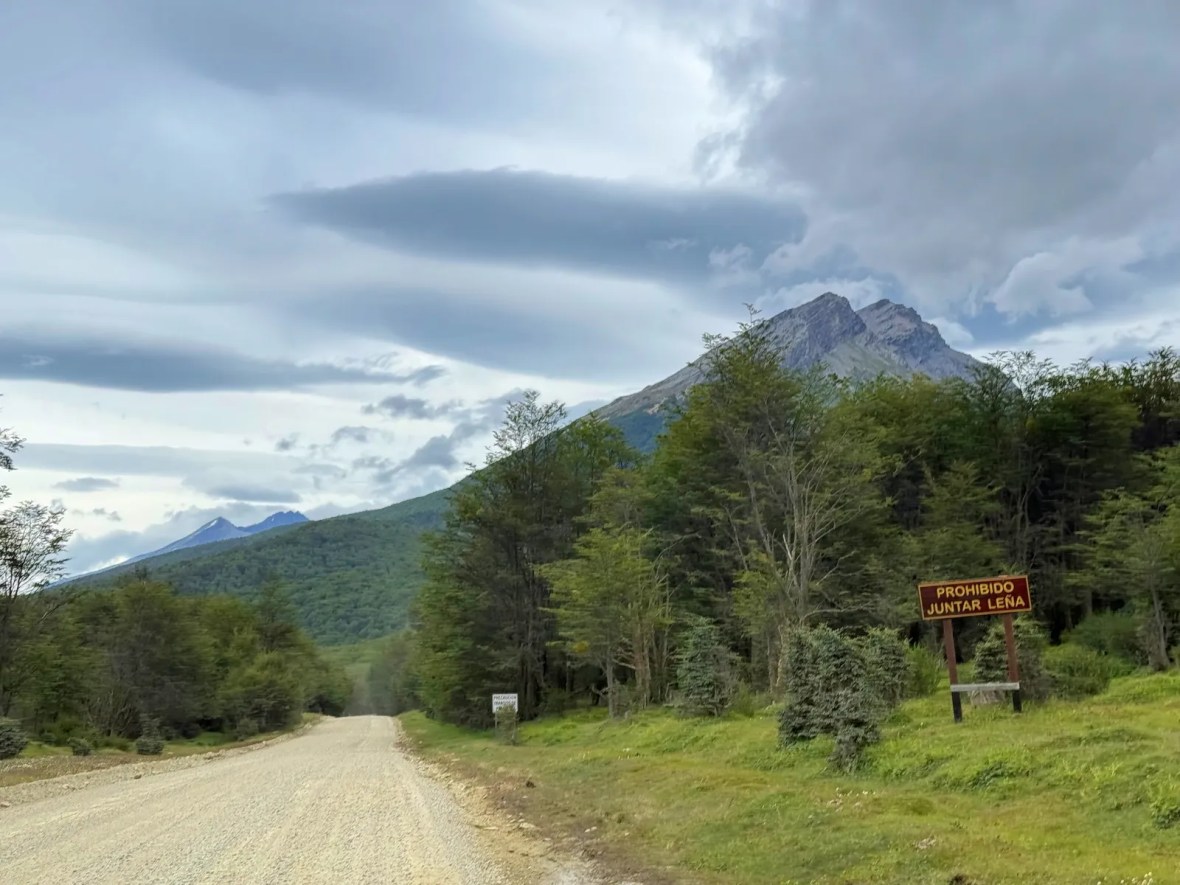
Tierra del Fuego National Park Without a Car: How to Visit
You can visit Tierra del Fuego National Park without a car, but arrange more than a ride to the entrance. Choose where you want to get out, how you will move between stops, and where your ride back to Ushuaia will collect you.
I learned this after taking an Uber from Ushuaia with friends and arriving without a workable plan for getting around the park. We spent much more time walking along roads than intended, missed Bahía Lapataia, and eventually found a driver willing to take us back. The scenery was lovely; the transport plan needed work.
My recommendation: choose a scheduled return transfer if you want to walk independently around a limited area. Choose an organized excursion if you want several viewpoints with less walking between them. Add the End of the World Train because you want the railway experience, with onward transport arranged separately.
Tierra del Fuego National Park without a car: choose your transport
| Option | Best fit | Confirm before paying |
|---|---|---|
| Regular minibus transfer | Independent walkers with a clear route | Your drop-off, return stop, pickup time and whether additional rides are included |
| Organized park excursion | First-time visitors wanting several sights in one outing | Actual stops, walking requirements, entry fees and return location |
| Prearranged private vehicle | Travelers prioritizing control over stops and pace | Park access, waiting time, full itinerary and the total return price |
| Train plus coordinated park excursion | Travelers who specifically want the railway | Station transfer, train ticket, park admission and who meets you afterward |
The right choice depends on what you want to do after getting there. A cheaper ride can still be a good choice, provided its stops and return arrangements match your day.
Does the minibus take you around the park?
The official information needs a little interpretation. Argentina’s national parks authority lists regular transfers from the Fadul and Maipú intersection in central Ushuaia, with seven stops including the entrance, railway station, Ensenada Zaratiegui, Alakush, Lago Acigami/Roca, Isla Entre Ríos and Bahía Lapataia.
Meanwhile, Ushuaia’s tourism office describes the minibuses as transport without a guide or a park sightseeing circuit. These descriptions distinguish a scheduled transfer with designated stops from an excursion that waits while you visit multiple sights.
Do not assume your ticket gives you unlimited rides between every stop. Ask the company to mark your outward and return stops on a map and confirm the timetable for your date. If you want to be dropped at one place and collected at another, get that agreed before leaving town.
Useful questions are:
- Which stops does this departure serve?
- Can I return from a different stop?
- Do I need to reserve a specific return departure?
- Is another ride inside the park included, available at extra cost, or unavailable?
- What should I do if weather or a trail closure changes my route?
Plan the return before leaving Ushuaia
On my visit, getting out of town felt easy. The problem came after we left the vehicle. We had not arranged transport between the places we wanted to see, and the return was uncertain too. A passing driver eventually helped us get back; I would not build another day around that happening.
Phone coverage adds another reason to settle the details in advance. The park’s official services page says there is no park Wi-Fi and telephone signal is available only at the entrance. Save your booking, pickup instructions and map offline. An eSIM does not solve a lack of local coverage.
If you book a private vehicle, distinguish an entrance drop-off from a vehicle that takes you to agreed sights and brings you home. Confirm that the provider can access the park for the service being sold. My past Uber trip is an experience, not evidence that a particular app ride will be available or suitable for your visit.
For a fixed flight or ship departure, work backward from when you must be back in town. Leave a buffer that accounts for the transfer and your onward arrangements; avoid making the final available pickup the only thing keeping the day on schedule.
Choose a manageable part of the park
Start with the official activities and trail information. Three useful planning anchors are:
- Bahía Lapataia: the end of Route 3, with boardwalk viewpoints. This is the stop I missed and would arrange transport to deliberately next time.
- Lago Acigami and Alakush: a lake area and visitor center that can anchor a less ambitious visit.
- Ensenada Zaratiegui: a coastal stop and the starting point of the Costera trail.
These are options to organize around, not a promise that you can comfortably walk between all of them. A plan based on one drop-off and one confirmed return pickup is easier to assess than a list of scattered photo stops.
The park lists Costera as an approximately eight-kilometer, four-hour one-way trail of medium difficulty, normally open from November through April. That makes it a substantial walking commitment, not a short link to squeeze in before your bus. Check current opening and trail conditions with park staff, and make sure the pickup works at the far end before starting.
If your priority is viewpoints rather than a long hike, compare an excursion’s exact stops. Ask how much walking each involves and what happens if a stop is unavailable. I would rather choose two places I can enjoy than spend the day worrying about reaching the next one.
Is the End of the World Train your transport solution?
The official Ushuaia railway listing places the starting station outside central Ushuaia, about eight kilometers toward the park. You still need to arrange how to reach it.
The tourism office describes two different arrangements: return to the starting station by train, or meet a previously arranged excursion at the park end to continue sightseeing. A train booking on its own should not be treated as a complete park itinerary.
I walked near the railway on my visit but did not ride it. If I were adding it now, I would check four separate items in the booking: transport from town, the rail journey, park admission, and transport afterward. Ask which are included and which require another payment or reservation.
If you mainly want forest, lake and coastal scenery, you can plan the park without the train. If the railway itself is a highlight for you, give it room in the day and coordinate the connections before booking other activities.
Two ways I would plan the day now
Independent walking with a booked return
Choose an open trail or compact area first, then book transport to suit it. Keep a saved map showing your arrival and pickup points. Bring lunch or snacks so that finding food does not determine the route. Leave enough time to reach the agreed stop comfortably, and keep the rest of the afternoon in Ushuaia flexible.
This is my choice for someone who enjoys walking and is happy to see fewer places slowly. It requires a workable timetable and an honest assessment of the route, weather and your own walking pace.
Several sights with an organized excursion
Compare the itinerary rather than the number of attractions in the title. Look for the places you actually want to visit, the amount of time out of the vehicle, language, pickup point and return arrangements. Add the train only when the provider explains how it connects with the rest of the outing.
After my improvised road walk, this is the option I would favor for a short first visit focused on several park sights. That is a planning preference based on what went wrong for me, rather than a review of an excursion I took.
Tickets, weather and a few things to pack
Keep park admission separate in your budget unless the booking explicitly includes it. Check the official park fee page for your visitor category and current purchase options. Check seasonal access hours too; the park’s closing time does not tell you when your last transfer leaves.
I found the wind cold when standing still and warmed up considerably while walking. I would bring adjustable layers, a windproof outer layer, comfortable walking shoes, water and something to eat. The park advises carrying water rather than drinking from natural watercourses.
Alakush has visitor services including food and toilets, but check service hours before depending on a meal there. Carry what you need for your planned walk, keep to permitted routes, and leave room to shorten the day if conditions change.
What I would do differently
I would still go to Tierra del Fuego National Park. I would simply decide how to get around before leaving Ushuaia. For independent walking, book a return transfer around a specific route. For several viewpoints with less time on foot, choose an excursion or an agreed private itinerary. The important booking is the one that covers the day you actually want to have.