How to Plan a Machu Picchu Trip: Tickets, Trains and Timing
For an independent Machu Picchu trip, check the entry route and a workable train connection together, secure the admission ticket, then finalize transport and overnight stops. The train reaches Machu Picchu Pueblo, also called Aguas Calientes. The archaeological site is a separate journey uphill, and your entry time must leave room for that connection.
On my January 2026 visit, I traveled from Ollantaytambo with companions and used two separate entry tickets: 3A and 1B. The different views were memorable, but arranging them around transport took more thought than simply choosing a train. This Machu Picchu trip planning guide focuses on those booking decisions, including what I would simplify for a first visit.
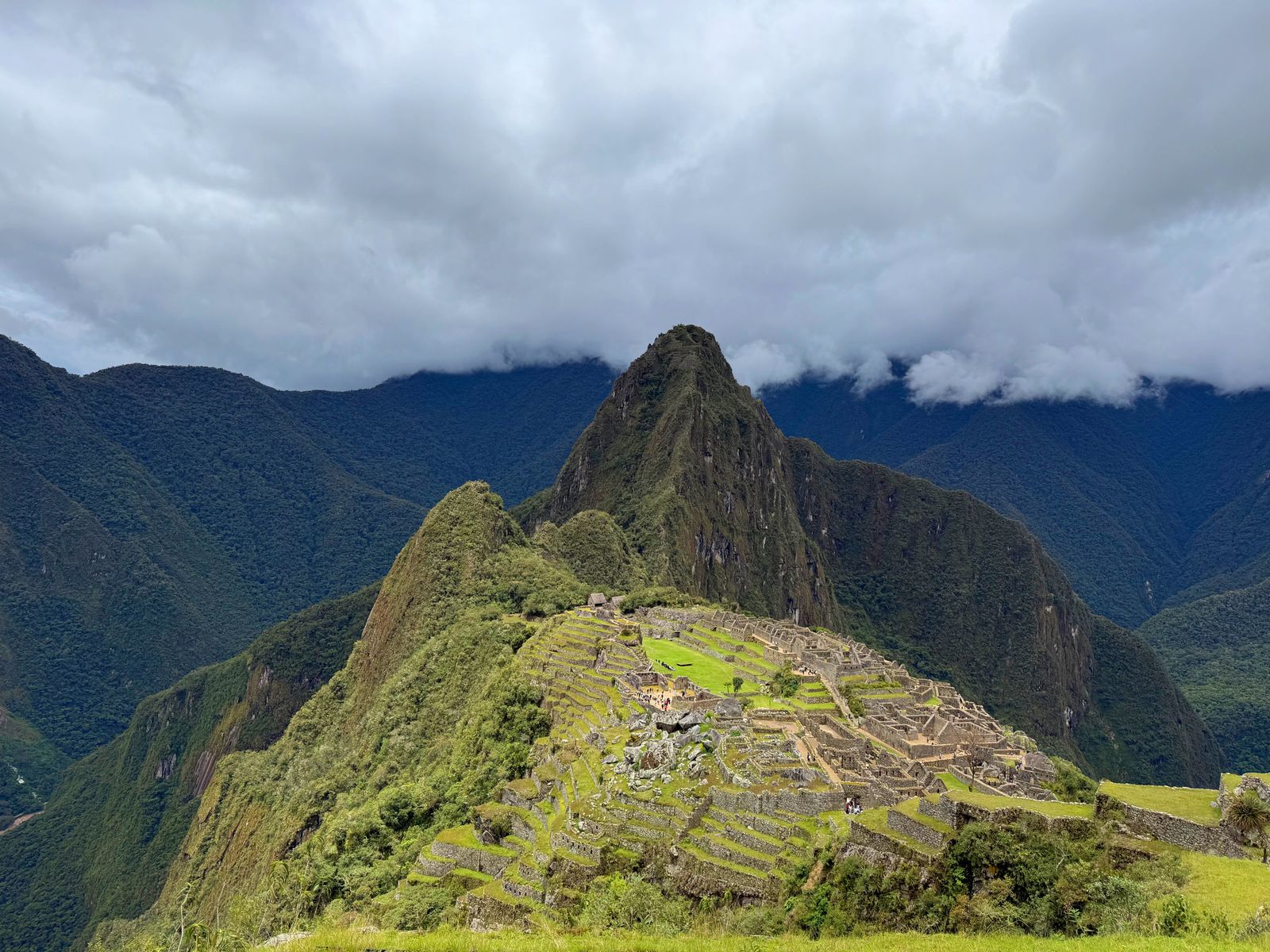
Official information checked October 22, 2026. My trip observations are from January 20, 2026. This article contains an affiliate link; if you book through it, I may earn a commission at no extra cost to you. Featured photograph: my view of Machu Picchu.
Machu Picchu trip planning: what to book first
Start with a shortlist of possible visit dates rather than a single nonrefundable hotel-and-train combination. For each date, check the route you actually want and whether the transport can get you there with breathing room. Once those pieces fit, complete the admission purchase and arrange the matching journey promptly; availability can change while you compare.
| Decision | Confirm before paying | Common mismatch |
|---|---|---|
| Site admission | Date, entry time, circuit, exact route and visitor details | Buying an available route that misses the view or walk you wanted |
| Train or bus-and-train journey | Starting address, arrival in Machu Picchu Pueblo and return destination | Treating arrival in town as arrival at the ruins |
| Uphill transfer and guide | Meeting place, reporting time, inclusions and route covered | Assuming these are included in a basic rail ticket |
| Accommodation and luggage | The correct town, check-in arrangements and where bags will wait | Booking a room in Ollantaytambo for an entry that needs an Aguas Calientes night |
For a package, ask the seller to identify each included component. An order confirmation saying “Machu Picchu” is less useful than a document specifying the circuit, route, entry time, train and transfer arrangements.
Choose the route before choosing the photograph
The official route directory lists three circuits divided into ten routes. Circuit 1 is panoramic, Circuit 2 is the classic visit, and Circuit 3 covers the royal sector and its associated routes. They are different visits, not interchangeable entrances to unrestricted wandering.
- Start by comparing 2A and 2B for a first visit: these belong to the classic circuit. Open their official maps and decide whether the route covers your priorities before paying.
- Look at 1B if the upper-terrace panorama is your main goal: do not assume it also gives you the same walk through the ruins as Circuit 2.
- Choose a mountain route deliberately: 3A includes Waynapicchu. Buying it simply because it is available can mean paying for a demanding walk you did not intend to do.
Some routes in the directory are marked as high-season-only. Check the route shown for your actual date, along with any current restrictions, rather than relying on a diagram saved months earlier.
Why I used 3A plus 1B—and would not make that the default
By the time we booked, 2A and 2B were sold out, and 3B was unavailable too. We ended up with 3A followed by 1B. I enjoyed seeing the stone buildings from the lower area, then looking across the site from the upper terrace. We did not climb to the Waynapicchu summit.
The climb to the 1B viewpoint still felt tiring. Two tickets also meant finding the next entrance and having the second ticket ready; I briefly struggled to locate the file I had saved. For a first visit, I would research one suitable route before trying to combine two. If you do want two, ask about the full walking time and exit-to-entry connection instead of copying my January time slots.
Buy through the official portal and finish the payment
The official online sales platform is Tu Boleto: Llaqta Machupicchu. Keep your identification details and payment method ready before starting, and check every visitor’s name and document number against the document they will carry.
The checkout process has changed since my trip. The Ministry of Culture’s September 22, 2026 announcement introduced a trial of direct purchase with confirmed payment and an initial maximum purchase window of 15 minutes. Unpaid space is released again. Follow the timer and instructions currently displayed by Tu Boleto; older instructions describing an hours-long reservation hold should not be your working plan.
Before leaving the checkout, verify that you have an issued ticket with the correct date, route and entry time. Save it somewhere you can open offline, with separate, clearly named files for admission, rail and bus tickets. A payment attempt or an item in a basket is not the same as an issued admission ticket.
If your intended dates are not offered, check official sales announcements. A rail company selling journeys for a future year does not establish that archaeological-site admission for those dates is on sale. Avoid committing to an inflexible train solely because its booking calendar is open.
Match the train to the entry time
Compare both PeruRail’s boarding guidance and Inca Rail’s route options. Read the whole itinerary: Inca Rail describes its Cusco departure as a bimodal journey, with a bus to Ollantaytambo followed by the train. An Ollantaytambo departure starts with the rail portion. Check the exact meeting address on whichever service you buy.
PeruRail asks passengers to be at the station 30 minutes before departure and to carry a valid passport or identity card plus a digital or printed ticket. That reporting time comes before the displayed departure; it is not spare time you can use for the journey from your hotel.
Work backward from the gate, not forward from breakfast
PROMPERÚ’s current visitor-planning page recommends reaching the uphill bus station one hour before your site entry time. It names both Consettur and San Antonio de Torontoy. Confirm the boarding arrangements with the operator you use; my January Consettur ride does not establish today’s queues or another company’s procedures.
For example, a 10 a.m. site ticket points to a 9 a.m. bus-station target under that guidance. A train arriving in town at 9 a.m. would leave no margin for getting off, finding the correct queue, handling bags or a delay. This is a planning example, not a recommended train departure: select your actual service only after checking its arrival and the onward arrangements.
Use the same method for the return. Add the full site visit, descent, any bag collection, the walk to the station and the operator’s reporting time. Then leave additional room for delays. On my return, the train ran roughly half an hour late and our arranged driver waited. That is a reason to leave flexibility, not a prediction of how late any future train will be.
Choose an overnight stop around the hardest connection
Machu Picchu Pueblo for an early entry
Sleeping in Machu Picchu Pueblo removes the inbound train from the morning of your visit. You still need to reach the uphill bus and the gate, but there is one fewer long connection before your fixed entry time. I would compare this option first if an early visit matters most.
Check the property’s exact map location, the walking route from the station, breakfast timing, bag storage after checkout and cancellation conditions. Search results can include places outside the town, so verify the address before booking. A hotel does not secure admission unless a specific package explicitly includes it.
Compare Machu Picchu Pueblo accommodation and cancellation terms
Ollantaytambo when the rail connection fits
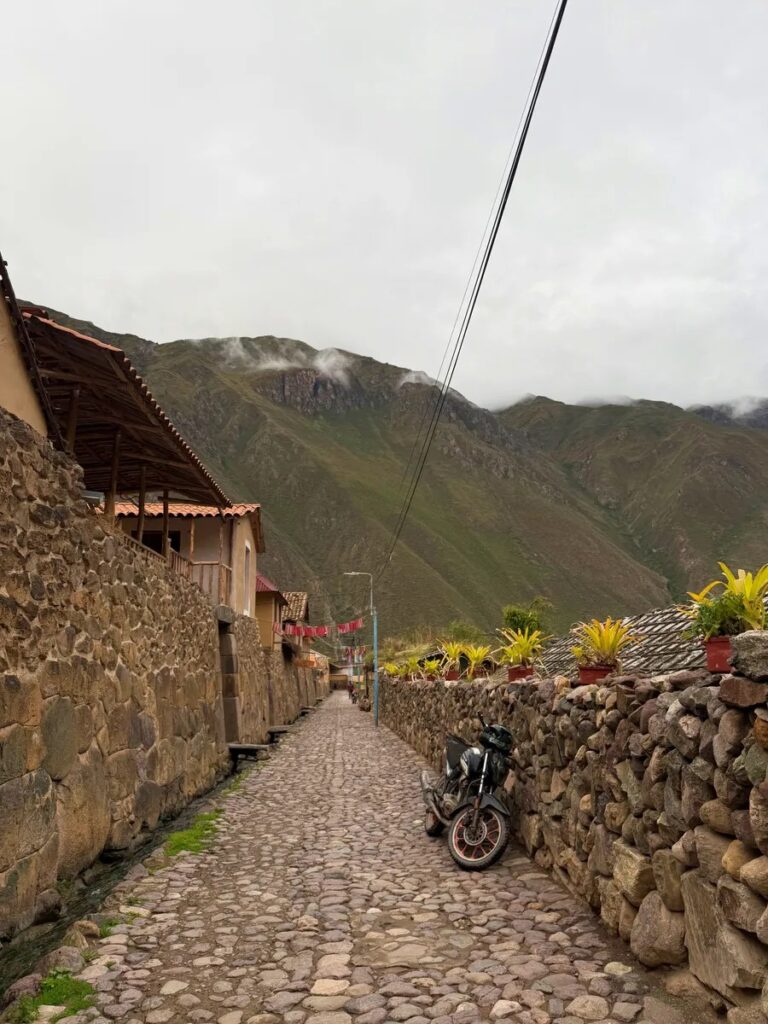
I slept in Ollantaytambo before my visit. It removed the road journey from Cusco from that morning, but we still needed the train and uphill bus. It makes sense only when those connections leave enough room before entry. My Ollantaytambo overnight guide covers the old-town versus station-location decision and the stay itself.
Cusco when you accept a longer travel day
Starting from Cusco can fit a coordinated itinerary, but compare the complete pickup-to-return day before choosing it to avoid a hotel move. If it pushes every connection close to the limit, add an overnight stop or choose a different available entry time. Keep city sightseeing separate: this three-day Cusco itinerary is designed for days in the city, outside the Machu Picchu journey.
Keep the train bag and site bag separate in your planning
A bag accepted on the train is not automatically suitable inside the archaeological site. The official site rules prohibit bags larger than 40 × 35 × 20 cm, as well as food, umbrellas, tripods and camera-extension equipment. Read the full list before packing. Follow the designated routes and leave the stonework untouched.
For the rail journey, use the dedicated PeruRail luggage page and your service’s booking conditions. Its current Machu Picchu section distinguishes an 8 kg backpack from a 12 kg carry-on, with different size limits; older general guidance on the same site gives a single 8 kg allowance. Confirm your bag type and dimensions with the operator if the wording on your ticket differs. Inca Rail has its own policy.
If you leave a larger bag behind, choose storage that fits your return route and collection time. A bag waiting at an Ollantaytambo hotel adds another stop if your next destination is Cusco. Keep identification, tickets and valuables with you rather than in stored luggage.
If the route you want is sold out
First compare another date or a route you would still enjoy. Do not buy a mountain route expecting to change it at the gate, or assume a panoramic ticket includes every part of the ruins. The route on the issued ticket is the visit you need to plan around.
PROMPERÚ describes in-person admission sales in Machu Picchu Pueblo as requiring at least an overnight stay, with route and time choice subject to availability and order of arrival. That is an uncertain alternative for a flexible trip, not a dependable rescue for a fixed same-day rail itinerary.
If comparing a package, ask for the exact route and what happens if it cannot be secured. Inca Rail, for example, advertises an All-Inclusive fare with admission, the Consettur bus and a guided visit. Those inclusions belong to that fare, not automatically to every train ticket. Get the details before buying separately and accidentally paying twice.
A final check before the journey
- Match the date and entry time on the issued admission ticket to your complete transport plan.
- Confirm the actual departure address, bus arrangements, guide meeting point and return destination.
- Save tickets offline and carry the identification used for booking.
- Check bag rules and agree on storage and collection arrangements.
- Recheck operator notices before travel, and leave room before any onward flight or other fixed departure.
The change I would make to my own planning is to decide the route earlier and simplify the connections around it. One well-chosen admission ticket, a workable train and the right overnight stop can make a more comfortable visit than squeezing every remaining option into one day.