Where to Stay in Tokyo: Ueno vs Asakusa vs Shinjuku
Where to stay in Tokyo becomes easier to decide when you compare the journey back to your room, not just the hotel price. Among Ueno, Asakusa and Shinjuku, I would start with Ueno for a Narita arrival and eastern Tokyo sightseeing, Asakusa for time around Sensoji and the river, or Shinjuku for a trip concentrated on the western side of the city.
The important detail is the exact station and exit. A hotel close to one railway entrance can still mean a longer walk from the train you actually use. This guide compares those tradeoffs and gives four hotel examples to help you build a shortlist. I previously stayed at Tokyu Stay Shinjuku on business trips; the other properties below are researched options, not hotels I am claiming to have tested.
Where to stay in Tokyo: the quick comparison
| Base | Start here if… | Check before booking |
|---|---|---|
| Ueno | You want museums, Ueno Park and a practical base for eastern Tokyo, especially when arriving via Keisei Ueno from Narita. | Whether the hotel is near JR Ueno, a Metro entrance or Keisei Ueno; these are not one interchangeable doorstep. |
| Asakusa | You want Sensoji, traditional shopping streets and riverside walks to be part of the neighborhood where you sleep. | Which Asakusa station the walking estimate refers to: Tsukuba Express or the subway/Tobu station area. |
| Shinjuku | Shopping, dining and repeated trips around western Tokyo shape your itinerary. | Whether your hotel works better from JR Shinjuku or Shinjuku-sanchome, plus the exit and elevator route. |
These are three useful starting points, not an exhaustive ranking of Tokyo neighborhoods. Plot your main activities first. If most of them lie somewhere else, there is little benefit in forcing your trip into this shortlist.
Ueno: start with the station you will actually use
Ueno is a sensible first comparison when your plans include parks, museums and eastern Tokyo. GO TOKYO’s Ueno guide highlights Ueno Park, its museums and the Ameyoko shopping area. That gives you things to do near your accommodation as well as rail connections elsewhere.
For a Narita arrival, compare the walk from Keisei Ueno rather than assuming that “near Ueno Station” means the same thing. Your daily sightseeing might favor a hotel beside JR Ueno even when the airport arrival involves a longer walk. Neither is automatically wrong; they solve different parts of the trip.
A location-first example: Hotel Resol Ueno
Hotel Resol Ueno’s official access page lists its address as 7-2-9 Ueno, Taito-ku. It places the property close to JR Ueno’s Asakusa and Iriya exits and Metro Exit 9, while giving a longer walk from Keisei Ueno. That difference is exactly what I would check with a suitcase.
Shortlist it if the station location matches your daily routes, then compare the actual room and cancellation conditions. I would not choose it solely because the shortest advertised walk looks impressive: that estimate only helps when you arrive at the relevant exit.
Asakusa: choose it for the neighborhood, then check the rail line
Asakusa is the option I would favor when time around Sensoji and the Sumida River matters as much as crossing the city efficiently. The official Asakusa guide describes the temple, Nakamise shopping street and riverside setting. Staying nearby lets you return to that area without treating every visit as a separate excursion.
The tradeoff is your wider itinerary. If you expect to spend most days around Shinjuku and Shibuya, compare those journeys before paying for an Asakusa hotel. The neighborhood you want to visit once is not necessarily the base you want to return to every night.
A useful station-distance example: The Kanzashi Tokyo Asakusa
The Kanzashi Tokyo Asakusa’s official directions list 2-27-10 Asakusa, Taito-ku and separate the walks from Tsukuba Express, the Ginza Line and the Toei Asakusa Line. The Tsukuba Express approach is shorter in the hotel’s estimates. A booking page that simply says “near Asakusa Station” leaves out that distinction.
This is an example to investigate if you want to stay in Asakusa and are comfortable with the mapped walk. Check the route from your arrival line, including crossings and luggage, rather than borrowing the walking estimate from another station.
Shinjuku: choose between the JR south side and Shinjuku-sanchome
Shinjuku can work well for a trip with substantial time in western Tokyo, shopping and meals around the station. It is also large enough that choosing a side matters. GO TOKYO’s Shinjuku guide distinguishes the western skyscraper area, eastern shopping and entertainment streets, and southern bus terminal and shopping complexes.
I would compare two specific options: a hotel near the JR south exit when that station or the expressway bus terminal is central to the trip, or Shinjuku-sanchome when its subway lines better match the itinerary. Do not treat those as the same location just because both hotel names contain “Shinjuku.”
For the JR south side: JR Kyushu Hotel Blossom Shinjuku
JR Kyushu Hotel Blossom Shinjuku’s access guide shows the approach from JR Shinjuku’s south exit and the expressway bus terminal. Its address is 2-6-2 Yoyogi, Shibuya-ku. The Yoyogi address is worth saving alongside the hotel name so there is no confusion when navigating.
This is a location-based shortlist option, not a personal room review. Compare it when your itinerary depends on that side of Shinjuku, then inspect the room you can actually book for your dates.
For subway access and a longer stay: Tokyu Stay Shinjuku
I often used Tokyu Stay Shinjuku for past business trips. That experience is why it remains on my shortlist, but I have not reviewed its newly renovated rooms. The hotel’s current website announces a September 29, 2026 reopening, so my earlier stays should not be read as a test of the present room layout or facilities.
Tokyu Stay Shinjuku, at 3-7-1 Shinjuku, Shinjuku-ku, identifies Shinjuku-sanchome as its nearest station. Its directions distinguish C3’s stairs, C4’s upward escalator and C6’s elevator. With a large bag, I would check the elevator route first rather than automatically following the shortest exit.
The hotel currently advertises in-room laundry equipment. If that is the reason you choose it, verify the equipment in the specific room you are reserving. Also confirm the property name: Tokyu Stay Shinjuku, Shinjuku Eastside and Nishi-Shinjuku are separate hotels.
Compare the whole stay, not the lowest nightly rate
Once you have a preferred area, compare two or three rooms for the same dates and number of guests. A cheaper listing can lose its appeal when it adds a difficult arrival, a long daily walk or a room format you do not want.
- Arrival: map the journey from your actual airport or arrival station to the hotel entrance. Recheck transport service for your travel date.
- Luggage: find an elevator route and confirm storage arrangements directly if you need to leave bags before check-in or after checkout.
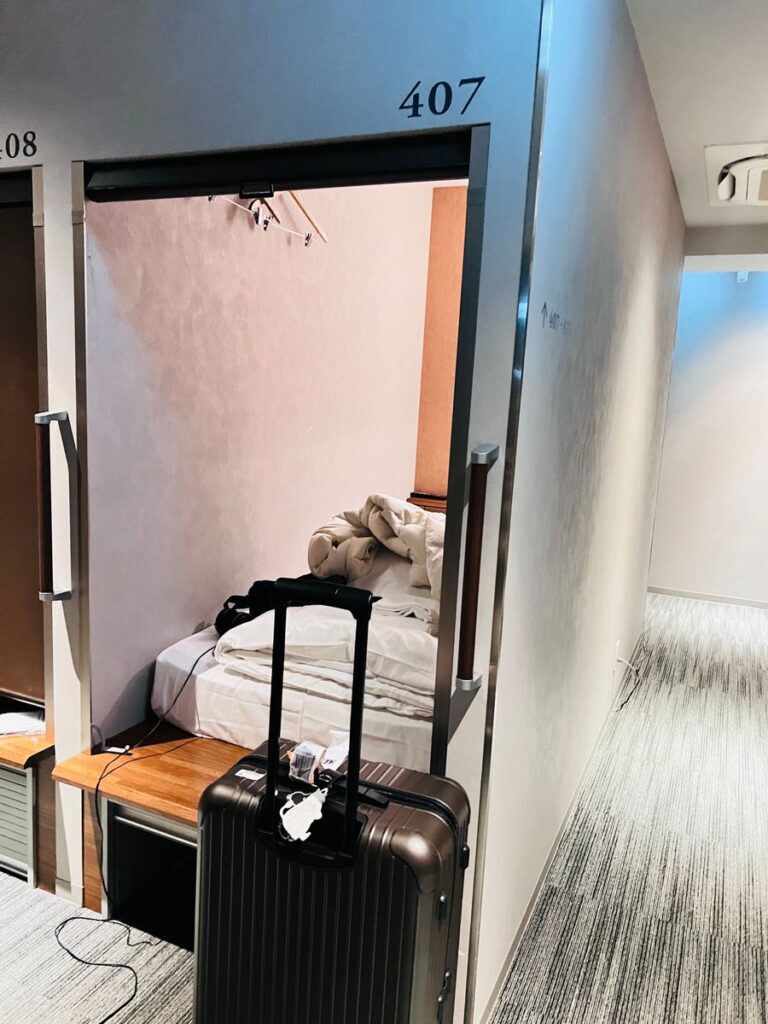
- Room: check whether it is a private room or cabin, bathroom arrangements, bed configuration and usable floor space.
- Total price: compare the full stay total, included meals and any charges payable at the property.
- Flexibility: read the cancellation deadline, payment timing and late-arrival instructions.
If the main decision is whether to save money with a capsule, read the Japan capsule hotel vs business hotel comparison before choosing a Tokyo neighborhood. A location bargain will not compensate for a room format that does not suit your sleep or privacy needs.
What I would prioritize when traveling alone
For a solo trip, I would choose a straightforward return route and a room I am comfortable spending time in. Check reception arrangements, building entry instructions and the route you expect to use in the evening. A district name or a women-only label cannot establish that every part of a stay will suit you.
There is no need to choose the busiest nightlife area simply because you are traveling alone, or a capsule simply because you only need one bed. Let your preferred evenings, luggage and privacy needs determine the shortlist.
My choice among these three areas
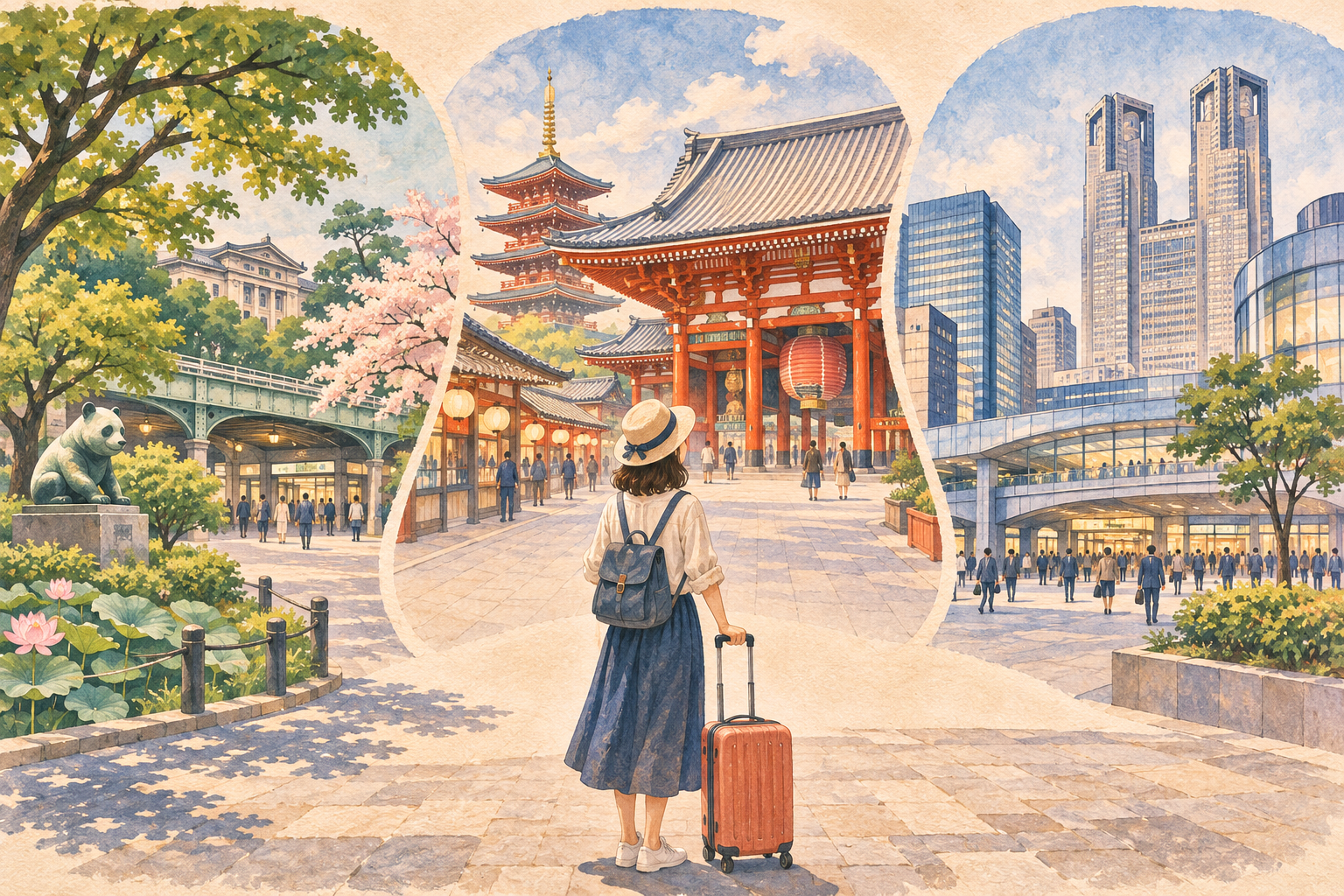
Start with Ueno when airport arrival and eastern Tokyo are the main priorities. Choose Asakusa when you want the temple-and-river neighborhood to be part of everyday life on the trip. Choose Shinjuku when your plans repeatedly draw you west, then decide which station and exit suit you.
Before paying, trace the last part of the journey to the hotel. That small check is often more useful than adding another ten properties to your list.
Official hotel and destination information checked November 3, 2026. Past Tokyu Stay visits predate this review of current information; exact stay dates are not recorded here. Featured image: AI-generated editorial illustration, not a photograph of a stay.