Philips Sonicare 9900 Prestige Review: Long-Term Use and Travel
The Philips Sonicare 9900 Prestige is worth considering if you already like Sonicare brushes and value a comfortable handle, straightforward cleaning, and a charging travel case. I would not stretch a budget just for the app. In this Philips Sonicare 9900 Prestige review, the most useful differences are the ones I noticed after the novelty wore off.
I bought my Japanese HX9992/21 in June 2022, after owning a DiamondClean and a DiamondClean Smart. By July 2026, it was still working normally with roughly twice-daily use. The easier-to-clean body and comfortable grip mattered more to me than checking brushing data every day.
Check the model number: this review covers my HX9992/21 experience, with US HX9990/11 specifications where identified. Philips also now lists HX9834-series brushes under the 9900 Prestige name on its US range page. Those are different models; my long-term experience does not cover them.
Philips Sonicare 9900 Prestige review: the quick verdict
- What I liked most: a handle that felt less cumbersome than my old DiamondClean Smart, fewer awkward areas to wipe, and the convenience of the A3 brush head.
- What became less important: the app. I checked it early on, then stopped bringing my phone into the bathroom for every session.
- The travel tradeoff: the case keeps the handle and brush head organized, but takes up more room than a basic toothbrush.
- The cost to consider: both the initial purchase and ongoing replacement heads.
If your existing toothbrush is comfortable and working well, these conveniences may not justify replacing it. If you already want to upgrade, think about how you will use the handle and case before paying for more connected features.
What held up well in everyday use
A handle I prefer to my old DiamondClean Smart
My hands are not particularly large, and my DiamondClean Smart felt cumbersome. The 9900 was easier for me to hold and angle toward the back of my mouth. That is a personal fit preference, so someone who prefers a different handle or brush-head shape may feel differently.
The body was also easier to wipe clean. Toothpaste residue and water marks around the older brush’s buttons bothered me; the simpler 9900 design made that daily maintenance less fiddly. This is the improvement I appreciated long after I stopped exploring the app.
The A3 head simplified my routine
I liked having one all-in-one head instead of keeping several heads around for different functions. My teeth felt smooth after brushing, but that feeling is not a measurement of plaque removal or evidence that a more expensive handle produces better results for everyone.
Useful longevity, with a clear date
My previous DiamondClean Smart eventually developed a vibration problem. The 9900 I bought in June 2022 was still functioning normally in July 2026. That has been reassuring, although individual units and batteries age differently. I would treat this as a reason to value a product that works well for me, rather than assume a particular lifespan when buying another one.
What SenseIQ actually does
Philips describes SenseIQ as a system that monitors brushing motion, pressure, duration, and frequency. Its purpose is to give feedback about how you brush.
The separate Adaptive Intensity feature changes the intensity when excessive pressure continues for an extended period. Philips says the normal setting returns at the next brushing session. That is more specific than describing the toothbrush as something that can think for you.
For shoppers, the useful question is whether feedback about pressure is something they want to act on. It is a feature to evaluate, not a reason to assume this brush will resolve a dental problem.
Do you need the app every time?
No. I used the app to check coverage and time when the brush was new, but eventually stopped opening it for every session. The day-to-day appeal of the handle remained.
Philips says the app provides feedback on pressure, cleaning action, coverage, and time, plus progress reports. Brushing does not require keeping its screen open beside you.
There is a distinction between brushing without the app and changing every setting without it. For the HX9990 models covered by its instructions, Philips directs users to change brushing modes in the app. If you dislike connected products, consider that before buying.
The US HX9990/11 specification lists five modes—Clean, White+, Gum Health, Deep Clean, and Sensitive—and three intensity levels. More settings are useful only if they fit your routine; I would not make the mode count the deciding factor.
Is the 9900 Prestige practical for travel?
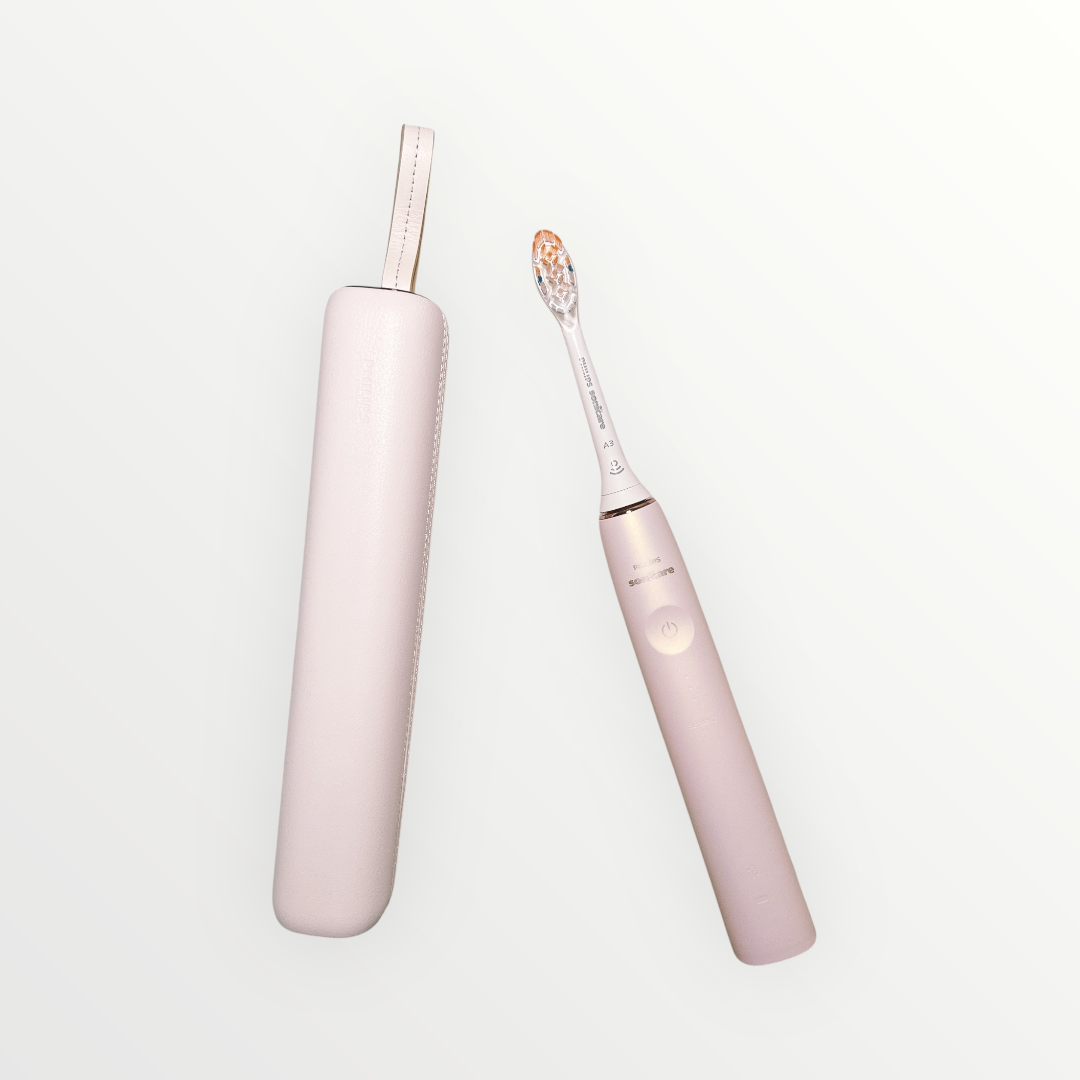
I found the case useful for keeping the brush and head separately secured in my luggage. It is still bulkier than a manual toothbrush. For a very lightly packed overnight trip, I sometimes consider a simpler backup brush instead.
The US HX9990/11 includes a USB charging travel case. According to Philips’ travel-case instructions, the case connects by USB cable to a wall adapter, which plugs into an outlet. Put the handle inside and leave the case connected until charging is complete. The case needs external power; do not count it as a power bank that recharges the brush while sitting unplugged in your bag.
I would plan charging around the battery performance of the brush you actually own. An older unit may need charging more often, and a long trip is a poor time to find out that your usual routine needs a backup.
- Charge before departure and check how your own battery performs before relying on it for a long trip.
- Confirm that the exact bundle includes a charging case, along with the cable and power accessories you need.
- Check the adapter’s input rating and destination plug shape, especially when buying an imported version.
- Compare the complete packed kit with the space you want to allocate to toiletries.
If you are deciding what deserves space beside your toiletries, the Owala FreeSip review covers another everyday item with travel-size tradeoffs.
The costs and model differences to check before buying
The purchase price is only part of the decision. I find the original replacement heads expensive enough to factor into the budget from the start. Compare the cost per head, rather than only the price of a multipack, and check the head type included in a promotion.
My Japanese HX9992/21 package included an A3 head, tongue cleaner, charging base, USB cable, and travel case. Do not assume that every US or imported package contains the same accessories. The manual available through Philips’ HX9990/11 support page explicitly notes that box contents can vary by model. Check the seller’s exact bundle before ordering.
I chose the Japanese version because its price and color options appealed to me at the time. For a purchase now, compare the full delivered cost, returns, seller, accessories, and applicable warranty support. A small saving can be less appealing if resolving a problem requires sending the brush overseas.
Check Philips’ official Sonicare 9900 Prestige HX9990/11 specifications. Confirm the selected model and bundle before checkout; this is the US model, not the Japanese unit I bought.
Would I choose it again?
Of the Sonicare brushes I have owned, the 9900 Prestige has been my favorite for its grip, simpler body, and everyday convenience. The app became less central, while those physical details kept mattering.
It is a sensible option for someone who already enjoys Sonicare and will use the case and feedback features. For someone watching their budget or minimizing luggage, I would compare simpler options first. The best reason to choose this brush is that its practical details suit your routine.