5 Minimalist Travel Gadgets: What Is Worth Packing?
The most useful minimalist travel gadgets solve a problem you expect to have: a phone running low on a long day out, clothes that are hard to find, or nowhere to put groceries. Start with what you already own, then add only the items that earn their space.
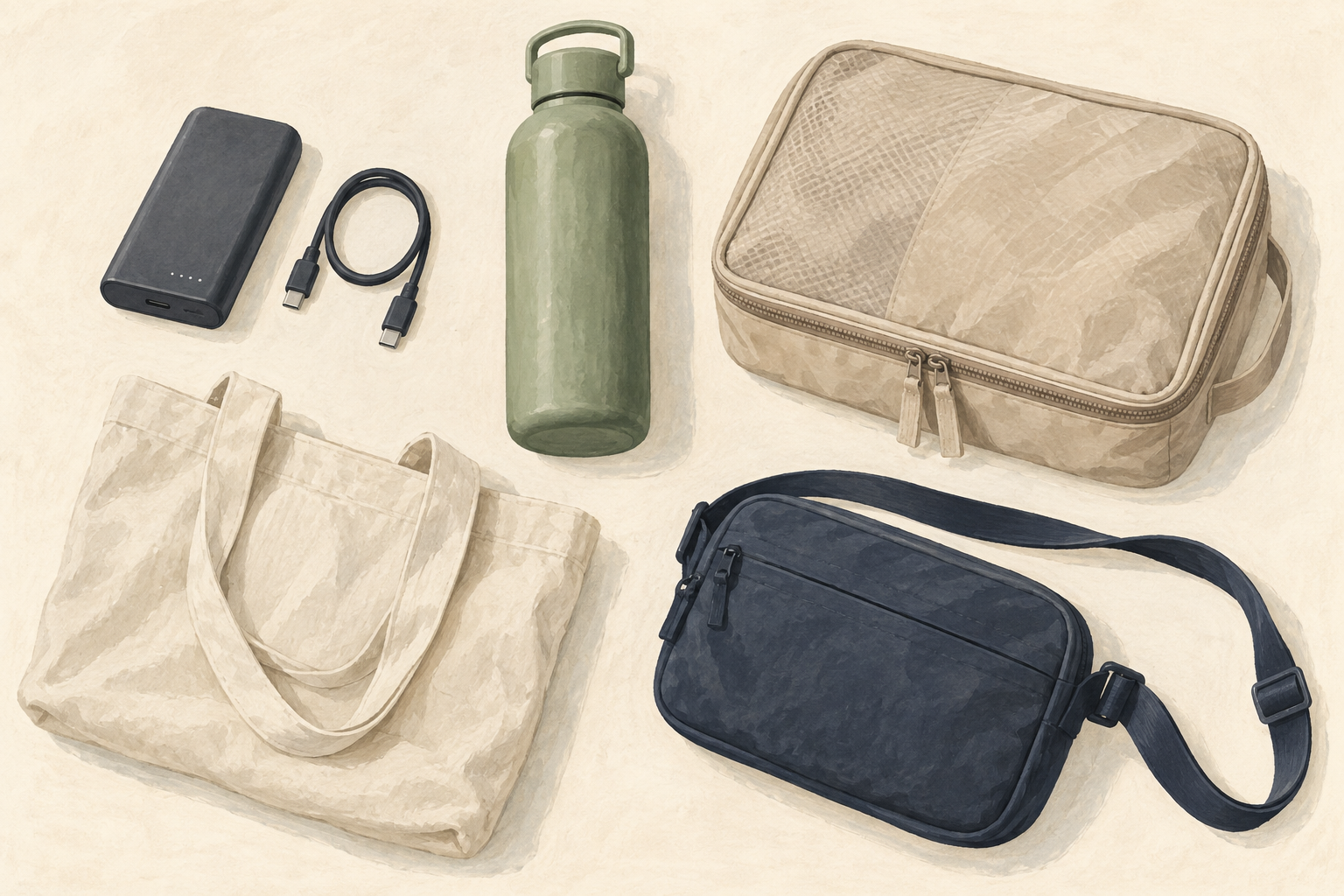
These five options cover charging, drinking water, packing, shopping, and carrying valuables. Each has a tradeoff. A small power bank has limited capacity; compression cubes add weight; and a self-cleaning bottle cannot make every water source safe.
Minimalist travel gadgets: what is worth packing?
- Compact power bank: useful when maps, tickets, and messages keep your phone busy between charging opportunities.
- Reusable water bottle: useful when you can refill from a safe source. Pay for UV features only if their specific function is worth the extra cost and charging.
- One or two compression cubes: useful for separating clothing and reducing bulk, especially when moving between hotels.
- One foldable tote: useful for groceries or a laundry run. A bag you already own may do the job.
- Crossbody bag with security features: worth considering if its closures and layout suit your daily routine, but it should replace another day bag rather than automatically become an extra.
1. A compact power bank: choose the connector before the size
The Anker Nano A1653 is one example: Anker lists a 5,000mAh battery, a folding USB-C connector, and dimensions of 3.03 × 1.45 × 0.98 inches. Check the model number because the Nano name covers different products.
A built-in connector can reduce cable clutter when it fits your phone. Confirm the phone’s port and whether its case leaves enough clearance. A USB-C plug will not directly fit an older iPhone with a Lightning port.
Treat this size as a compact backup. Do not assume it will recharge every phone from empty to full: phone capacity, charging losses, and using the phone while charging affect the result. Test your own combination before relying on it for a long travel day. If you routinely need several charges, compare a larger bank and accept the extra weight.
For flights: the FAA’s battery guidance requires power banks in carry-on baggage. Remove yours if that bag is checked at the gate, and protect it against damage and short circuits. Check your airline’s current capacity, storage, and onboard-use restrictions, along with any manufacturer recall affecting your exact model.
2. A water bottle: separate carrying water from treating it
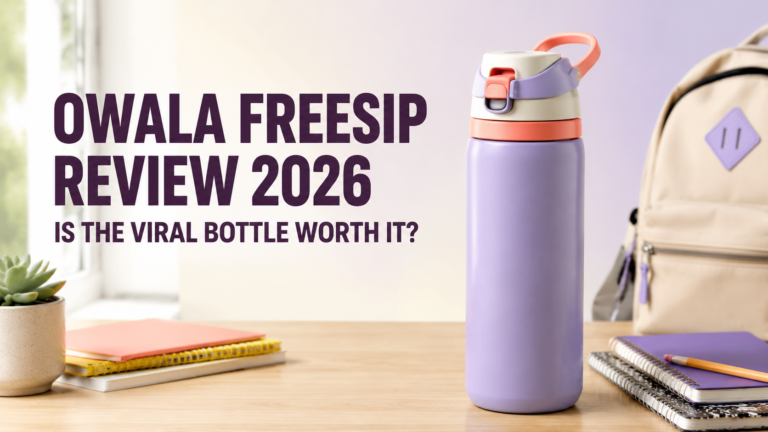
For city trips with dependable drinking-water refills, a bottle that fits your bag and is easy to wash may be all you need. Consider filled weight and the number of parts you will have to clean. The Owala FreeSip review compares lid, cleaning, and size tradeoffs for an everyday cold-water bottle.
If you are considering the original LARQ Bottle PureVis, understand its limits. It uses UV-C light and has an automatic cleaning cycle every two hours, but LARQ says this model has no filter and does not remove sediment, heavy metals, or chemicals. Its UV system requires clear water; the self-cleaning label is not a promise of safe water anywhere.
UV treatment and filtration address different problems. The CDC’s guidance for travelers explains that suspended particles can shield microorganisms from UV light. If a water source is uncertain, use a known safe supply or a treatment method appropriate to its hazards. Do not choose a bottle alone as your entire remote-travel water plan.
Also check which LARQ model you are buying: a model with a filter has different capabilities and maintenance needs. For a minimalist city trip, a simpler bottle may be the more practical choice.
3. Compression packing cubes: organize first, compress second
Compression cubes help when you want to separate clothes and reduce the space occupied by soft items. A second zipper tightens the packed cube. They do not reduce the weight of the clothing, and they add their own fabric and hardware.
As a concrete example, Eagle Creek’s Pack-It Reveal Compression Cube M uses a compression zipper and mesh panel. The manufacturer lists it at 153g, with a 36 × 25cm footprint. That footprint matters more than buying the largest set: measure the usable interior of your bag first.
Begin with one cube for clothing and, if needed, a smaller organizer for underwear. Pack your normal trip wardrobe before deciding whether more cubes help. A heavily filled cube can become an awkward rigid block, while leaving a little room makes it easier to close and rearrange.
For a real example of separating an overnight bag from larger luggage, my Ollantaytambo overnight guide explains how I left my main backpack and carried a smaller daypack onward toward Machu Picchu.
For a short trip with few clothes, an ordinary lightweight pouch may be enough. Compression is most useful when it improves access and fit, rather than encouraging you to add more clothes just because a zipper will close.
4. A foldable tote: pack one that you already use
A reusable shopping bag can handle a grocery stop, a trip to the laundry, or carrying a few items between your room and a shared kitchen. You do not need a multipack for one trip. Choose one bag whose handles feel comfortable and whose folded size fits a pocket of your day bag.
Try it with the load you expect to carry before departure. Keep sharp or leaking items contained separately, and check the bag’s care instructions. An open tote is a poor place for a passport or loose wallet in a crowd.
If your existing daypack handles all of these jobs and you rarely buy groceries, leave the tote behind. A useful spare is different from an item that stays at the bottom of the suitcase throughout the trip.
5. An anti-theft crossbody bag: check weight and everyday access
The Travelon Anti-Theft Classic Messenger, style 42242, is one option to compare. Travelon lists locking zippers, slash-resistant body panels and strap protection, plus RFID-blocking card and passport storage. Its listed weight is 1.10lb, roughly 500g, before you add anything.
That empty weight is a meaningful tradeoff if you are trying to keep a small daily load. Try the closures, strap adjustment, and pocket access with your phone and usual essentials. Check your own bottle’s fit rather than assuming every bottle will fit a bag’s side pocket.
Security features can make some forms of opportunistic theft harder; they do not make a bag theft-proof or an unfamiliar street safe. Keep the bag closed and close to you, and avoid putting all your payment options in one easy-to-reach pocket.
Choose it if you prefer the layout and will actually use the closures. Keep an existing comfortable bag if buying another one would mainly add weight and duplicate its function.
A final packing check
Lay out the five categories beside your current kit and identify what each would replace. If a new item adds a charger, maintenance task, or second bag, include that in the decision. Compare exact model numbers and current seller conditions before buying; a familiar product name does not guarantee identical specifications.
For many short city trips, a compatible power bank, an ordinary refillable bottle, and the bags you already use are enough. Add compression or security features when they solve a clear problem in your itinerary.