Spain Solo Travel: Plan a Manageable First Route
For a first Spain solo trip, start with two bases for seven nights, three for ten nights, or four for fourteen nights. Choose the places you most want to see, count the days spent changing cities, and check your journey home before adding a side trip. A route that leaves you time to settle in is easier to manage alone.
I spent about twenty days traveling through Madrid, Seville, Ronda, Málaga, Granada, Córdoba, and Barcelona. I had considered adding Portugal, then decided to keep the trip within Spain. Even that route included several short stops. The plans below are simpler alternatives I would consider for a first visit, rather than shorter trips I personally followed.
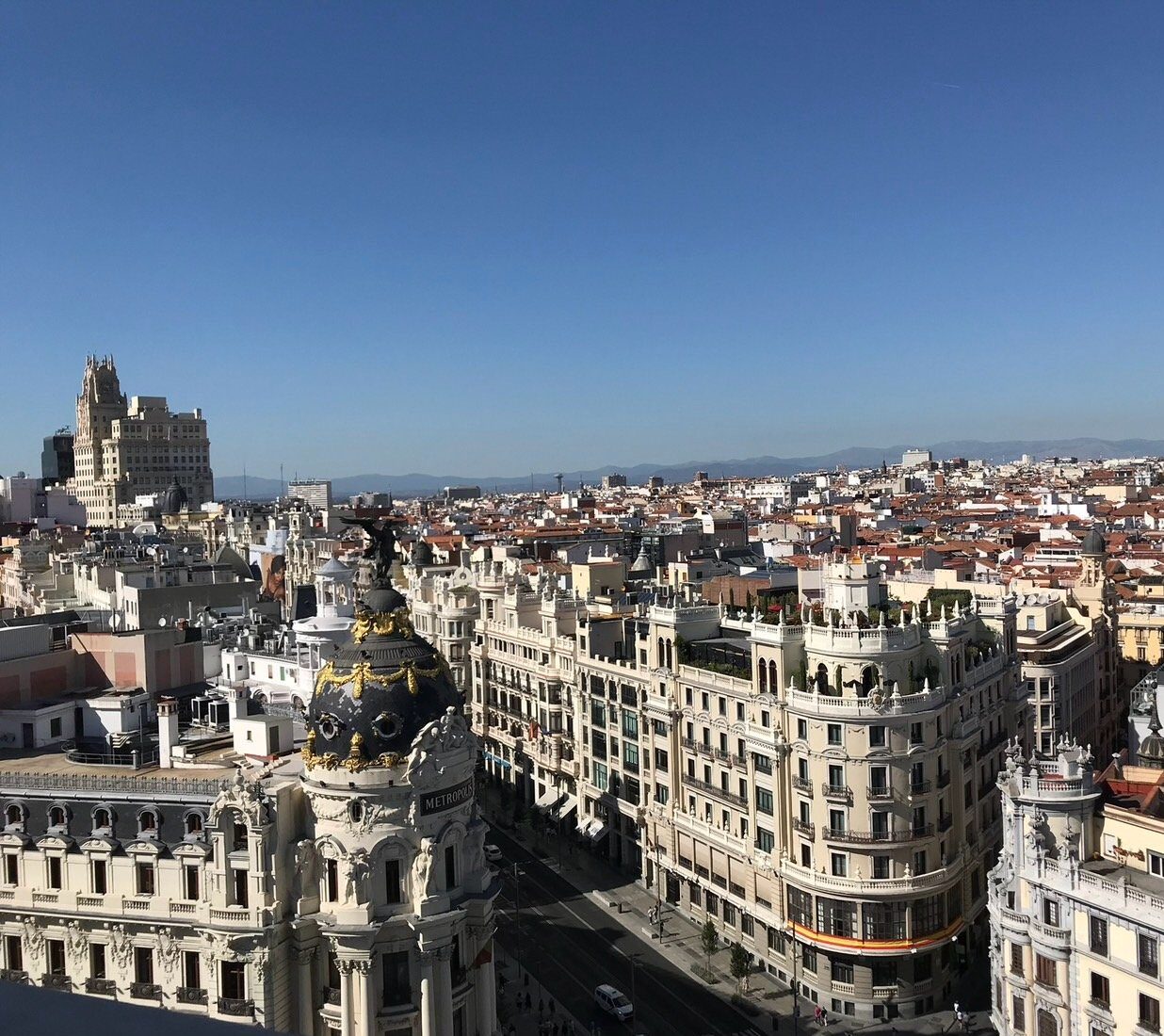
Official transport and visitor information checked October 13, 2026. Featured photograph: Madrid from my Spain trip.
Spain solo travel: choose your route by nights, not a city checklist
Count the nights you actually have in Spain. Seven nights usually span parts of eight calendar days, but a late arrival and early departure can leave much less sightseeing time. The allocations below are suggestions; they assume you can arrange a sensible departure from the final area.
| Time in Spain | Suggested bases | Best fit | Main tradeoff |
|---|---|---|---|
| 7 nights | Madrid 3, Barcelona 4 | Two major cities with one intercity move | No Andalusia on this trip |
| 10 nights | Madrid 4, Seville 3, Granada 3 | Madrid plus an Andalusian route centered on Granada | Leave Barcelona for another visit and plan the final departure carefully |
| 14 nights | Madrid 4, Seville 3, Granada 3, Barcelona 4 | A broader first visit with three changes of base | The Granada–Barcelona move needs a substantial travel block |
If your international journey leaves from Madrid, include the return there in the plan. For an early flight, I would move a night from another stop to Madrid and travel back the day before. Do not treat the return to your departure city as free time outside the itinerary.
For a still easier ten-night trip, split the time between Madrid and Seville. You do not need a third base just because the table allows one. If Barcelona is your main reason for visiting Spain, choose Madrid and Barcelona and give them more time instead.
What I would simplify from my twenty-day route
My original plan included a day in Ronda followed by a move to Málaga that evening, a short Málaga stay, and a short Córdoba stop. Those places mattered to my trip, but they also added decisions about luggage, stations, check-in, and the next departure.
For a shorter first visit, I would remove those extra changes of base before cutting every city to one or two nights. Three nights in one place normally gives you two full days between arrival and departure. One night can give you little more than an evening once transport is included.
Use this test for each proposed stop: what do I want to do here that is worth packing up and moving again? A specific answer may justify an overnight stay. A vague feeling that you should see every famous city usually does not.
I used Google My Maps to collect places I wanted to see. For your own route, separate the map into essential stops and optional ideas. A saved pin is useful information, not an obligation to cross the city.
Check the three main transfers before fixing the dates
Madrid to Barcelona or Seville
Renfe publishes routes for both Madrid–Barcelona and Madrid–Seville. These make useful starting points for the two route choices above. Search your actual date and read the station names on the result rather than selecting only by city name.
Compare the whole moving day: check-out, reaching the station, time on the train, reaching the next address, and check-in. A cheaper departure may be a poor fit if it leaves you carrying luggage around for hours or arriving after reception closes.
Seville to Granada
Alsa’s Seville–Granada route provides a direct coach option to investigate. Its route information lists Seville’s Plaza de Armas and Granada’s bus station, among other Granada-area arrival points. Select the exact stop you need: the airport, bus station, and other stops are not interchangeable.
Compare the coach with the rail options shown for your date, including any connection. Then map the arrival stop to your accommodation. Keep this as a transfer day with an easy meal or short walk afterward, rather than attaching a tightly timed attraction visit.
Granada to Barcelona
This is the transfer that makes the fourteen-night version more demanding. Renfe’s September 2026 timetable-change notice confirms a Granada–Barcelona AVE service and illustrates how much departure times can change. Use the current journey search for your travel day; an old itinerary screenshot is not a timetable.
Reserve a substantial part of the day for this move. Avoid a prepaid Barcelona activity soon after the scheduled arrival. If that long transfer feels like too much, finish with Andalusia and save Barcelona for another trip rather than trying to recover the time by rushing Granada.
Give the Alhambra its own day in Granada
If the Alhambra is a main reason for choosing Granada, check its availability while the overall route is still flexible. Put the visit on a full day between arrival and departure, so a late train or coach does not threaten your entry.
The Alhambra’s official visitor rules say the Nasrid Palaces have a specific entry time printed on the ticket and require an original national ID or passport at access checks. Read your chosen admission’s inclusions carefully and carry the original document; do not rely on a phone photograph of it.
Leave the rest of that day light. With three Granada nights, you have room for the Alhambra, another unhurried city day, and the practical tasks that otherwise get squeezed into late evenings. If the admission you want is unavailable, decide whether to change dates or change your priorities before committing to the rest of the route.
Make each arrival easy to handle alone
My Spain trip was an independent solo journey, but it also included meeting friends. Traveling solo does not require doing every day without company. The part worth preparing for is being able to manage a transfer, check-in, or change of plan by yourself.
For every new base, save four things somewhere you can access offline:
- The exact arrival station or stop, including its full name.
- Your accommodation address and contact number, plus the agreed check-in arrangements.
- A simple route between the two, and a backup if you arrive later than expected.
- The next day’s one fixed commitment, if there is one. Leave the remaining time flexible.
I prioritized cancellable hostel reservations while arranging my trip. For your own bookings, check the cancellation deadline and arrival procedure attached to the actual reservation. A flexible plan only stays flexible until those deadlines pass.
Choose your daily bag and luggage so that you can manage them while checking a ticket or map. My minimalist travel gadgets guide discusses phone-power backup, packing organization, and bag tradeoffs. Start with what you already use and can comfortably carry.
Build practical safety habits into the route
Spain’s official safety advice emphasizes protecting belongings in busy places, carrying only the money you need, and avoiding empty areas. It lists 112 as the free emergency number throughout Spain.
For this route, favor arrivals that give you time to find your address and deal with a delay. Keep your phone and wallet secure while handling luggage, and pause somewhere suitable to study directions instead of trying to manage everything while walking. Separate a backup payment option from the wallet you use most often.
A convenient location or a well-equipped bag cannot guarantee safety. Check the immediate route to your accommodation and change plans if a situation feels uncomfortable. Save your insurer’s contact details and let someone you trust know your overnight base.
The last check before you commit
Read the itinerary as a sequence of ordinary days, not destination names: where will you wake up, what must happen that day, and where will your luggage be? Mark every change of base and every fixed entry time. If the plan only works when all of them run perfectly, remove a stop.
For seven nights, I would choose two cities. For ten, I would choose either a relaxed two-base trip or Madrid, Seville, and Granada. For fourteen, Barcelona can fit if you are comfortable giving the long transfer its own space. The most useful lesson from my longer Spain trip is to decide what to leave out early, while the route is still easy to change.