A Realistic 2-Day Jeonju Itinerary (Without Rushing)
Two days and one night is the right amount of time for a first Jeonju trip if you want more than a quick walk through Hanok Village. This itinerary keeps the main sights within a compact area, leaves room for local meals, and puts the steeper walk on the first afternoon. It works particularly well as an overnight side trip from Seoul.
I followed this two-day route on my trip, and the current visitor details below will help you plan the same stops independently.
Information checked: September 2026. Hours, admission fees, restaurants, and transport can change. Recheck official pages and live navigation before your trip.
2-day Jeonju itinerary at a glance
| Day | Route | Why this order works |
|---|---|---|
| Day 1 | Arrive and leave luggage → Veteran Kalguksu → Jaman Mural Village → Jeonju Hyanggyo → Omokdae → makgeolli dinner | The mural village, Hyanggyo, and Omokdae form a logical outer loop. The route includes slopes and stairs, so do it before your legs are tired on departure day. |
| Day 2 | Hanok Village → Jeondong Cathedral → Gyeonggijeon → bean-sprout soup rice → Namcheongyo → coffee break → Nambu Market area → PNB bakery → collect luggage | The morning stays around the central historic area; lunch and the riverside walk lead naturally toward a slower afternoon. |
This is a walking-heavy itinerary rather than a checklist of blockbuster attractions. Most stops are close enough to combine on foot, but Jaman Mural Village and Omokdae add uphill sections. In hot, wet, or icy weather, drop one of those two stops instead of rushing.
Is two days in Jeonju enough?
Yes. One day is enough for Hanok Village, Gyeonggijeon, and a meal, but it compresses Jeonju into its busiest visitor zone. Staying overnight lets you see quieter lanes, eat dinner without watching the return timetable, and walk through the village early the next morning.
Two days suits travelers who enjoy traditional architecture, regional food, markets, and unhurried walking. If this is your first short trip to Korea and Seoul is your priority, Jeonju may be harder to justify. For repeat visitors, it offers a useful change of pace.
Where to stay for this Jeonju itinerary
Choose accommodation in or immediately beside Jeonju Hanok Village. The best location is one that lets you leave your bag before the Day 1 walk and collect it on the way to your departure point. Staying near the bus terminals or railway station may reduce one transfer, but it adds repeated trips to the historic center.
Affiliate disclosure: The hotel link below is an affiliate link. If you book through it, Ritaishare may earn a commission at no extra cost to you.
Check current rates and availability at Jeonju Hotel The Vincent on Booking.com. Compare the cancellation terms and room details for your dates; availability and prices change.
Before Day 1: getting to Jeonju
From Seoul, direct KTX trains usually depart from Yongsan Station and arrive at Jeonju Station. Express and intercity buses use different Seoul and Jeonju terminals. The fastest ticket is not always the fastest door to door, so compare your Seoul hotel location as well as the scheduled ride.
Use the official Korail booking site for trains and Kobus for express buses. If you are still deciding where to base yourself before this side trip, Ritaishare’s Seoul neighborhood guide for solo travelers explains the tradeoffs among Myeongdong, Hongdae, Insadong, Seoul Station, and Gangnam.
All main arrival points require a local bus or taxi to the Hanok Village area. The official Hanok Village directions page lists current bus information, but route numbers and journey times should still be checked in Naver Map or KakaoMap on the day.
Day 1: the quieter side of Jeonju
Hotel → Veteran Kalguksu → Jaman Mural Village → Jeonju Hyanggyo → Omokdae → makgeolli dinner
1. Leave your luggage before lunch
Do not take a suitcase around the afternoon loop. It includes uneven pavement, a residential hillside, and stairs. If your room is not ready, ask the hotel whether it can hold your bag; policies vary, so confirm before arrival.
2. Start with Veteran Kalguksu
Veteran Kalguksu (베테랑 칼국수) is inside the Hanok Village area, making it a convenient first meal. I ate the signature knife-cut noodles here after arriving. My bowl had a rich eggy broth and a fragrant seed powder topping; the meal was filling without requiring a detour from the walking route.
The restaurant can be busy at conventional lunch times. I visited later in the afternoon and did not have to wait, but lines can vary by day and time. Keep another nearby lunch option in mind if the line is longer than you want.
3. Walk through Jaman Mural Village
Jaman Mural Village is a hillside residential area with painted walls, small businesses, and ordinary homes. Treat it as a neighborhood rather than an outdoor theme park: keep voices down, avoid blocking doorways, and do not photograph residents without permission.
I found that some murals showed their age and did not consider every lane essential. It is still a useful link between the busier visitor district and the quieter eastern side of the village. If street art is not a priority, walk the shortest sensible route toward Hyanggyo.
4. Slow down at Jeonju Hyanggyo
Jeonju Hyanggyo is a historic Confucian school with traditional buildings, courtyards, and mature trees. The atmosphere is noticeably calmer than the main Hanok Village shopping streets. On my route, this was a brief, quiet stop rather than a museum-style visit.
The official Jeonju cultural-sites page currently lists viewing from 10 a.m. to 6 p.m. with free admission. Recheck on the day because ceremonies, filming, maintenance, or seasonal operations can affect access.
5. Climb to Omokdae only if conditions are good
Omokdae sits above the village and provides a broader view across the tiled roofs. Reaching it requires an uphill walk and steps. I appreciated seeing the hanok district from above, but the climb came after the mural village and Hyanggyo, when the heat and accumulated walking were noticeable.
Skip the climb in severe heat, rain, snow, or poor visibility. The itinerary still works without it. If you go, wear shoes with reliable grip and save enough daylight for the descent.
6. Make dinner about Jeonju food, not another sight
Jeonju’s makgeolli restaurants serve rice wine with an expanding spread of shared dishes. I went with a Korean friend, and our table filled with food as we ate. This format made sense for two people; before the trip, I had worried it would be impractical alone.
Solo travelers do not need to force this stop. Choose bibimbap, kongnamul gukbap (bean-sprout soup with rice), or another individual meal if you would rather not order a group-sized spread. If you drink, confirm how you will walk or take a taxi back and never rely on alcohol as a reason to ignore personal limits.
Day 2: Hanok Village, Gyeonggijeon, and the river
Hanok Village → Jeondong Cathedral → Gyeonggijeon → lunch → Namcheongyo → coffee → market area → PNB bakery → hotel
1. See Hanok Village before it gets busy
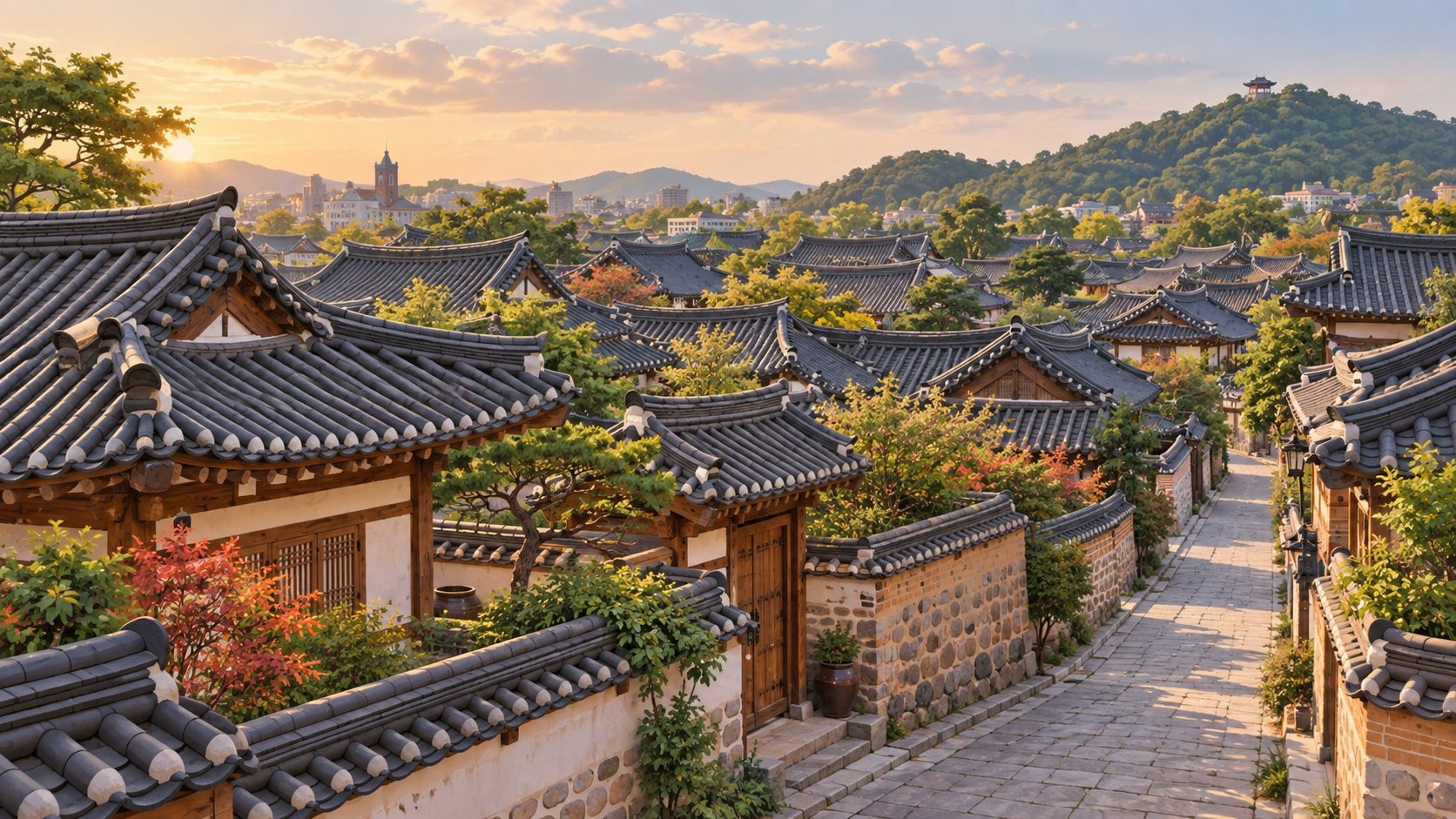
The village itself is an open neighborhood rather than a gated attraction. The official site says the area contains more than 700 hanok buildings and is open around the clock, although individual cultural sites and businesses keep their own hours. Early morning is useful for seeing the lanes before shops and rental studios draw larger crowds.
You do not need to rent hanbok to make the visit worthwhile. Focus on rooflines, stone walls, courtyards visible from public areas, and the contrast between busy Taejo-ro and the side streets. Respect signs marking private property.
2. Pass Jeondong Cathedral, then enter Gyeonggijeon
Jeondong Cathedral stands opposite Gyeonggijeon. On my trip, I viewed the cathedral from outside. The official visitor page currently lists interior access from 9 a.m. to 5 p.m., excluding Mass times. Worship takes priority, so do not enter during a service simply to sightsee.
Gyeonggijeon was built to enshrine the portrait of King Taejo, founder of the Joseon dynasty. Its compounds and shaded grounds deserve more time than a quick photo at the gate. The official site currently lists year-round viewing from 10 a.m. to 6 p.m. and admission of 3,000 won for an adult who is not a Jeonju resident. Verify the fee and any closure notice before visiting.
Allow roughly 60–90 minutes for Gyeonggijeon and the Royal Portrait Museum if both are open and you enjoy history. Travelers mainly interested in the architecture can move more quickly.
3. Eat kongnamul gukbap for lunch
Bean-sprout soup with rice is one of Jeonju’s most practical local meals, especially after a morning outside. I ate it at Hyundaiok and ordered the classic soup with a squid topping. I particularly liked the clean broth, bean sprouts, seaweed, and the way the egg was served separately.
Hyundaiok has multiple branches and menus can differ, so confirm the exact location rather than following a brand name alone. I waited about 20–30 minutes on my visit; current queues may be shorter or longer.
4. Walk to Namcheongyo and Cheongyeonru Pavilion
Continue south toward Namcheongyo, the bridge across Jeonjucheon, and the pavilion above it. This stretch opens up the view after the denser lanes of Hanok Village. I used the pavilion as a genuinely cool rest stop on a hot day before continuing.
The river walk is easy to shorten. If the weather is poor or you need to collect luggage early, cross the bridge, pause for the view, and turn back rather than completing a longer riverside loop.
5. Take a real break before the market
A café stop is part of the pacing, not another must-see attraction. I stopped at Bird By Bird before moving toward the market area. Use whichever café is open and convenient when you need it; small businesses can change hours or close with little notice.
6. Finish with the market area and a portable souvenir
My final food stop was Owonjib near Jeonju Jungang Market, where simple gimbap is paired with seasoned charcoal-grilled meat and lettuce. The combination was more distinctive than another snack crawl through the main Hanok Village street. The market is outside the tightest sightseeing core, so watch your departure time.
PNB Poongnyeon Bakery is a practical last stop because its handmade choco pies travel better when purchased just before leaving. I bought three on the way back to collect my luggage. The bakery’s official store page is the best place to confirm the main-branch location and current hours.
How to adjust the itinerary
| If you need… | Keep | Skip or shorten |
|---|---|---|
| A low-walking version | Hanok Village, Gyeonggijeon, two local meals | Jaman Mural Village, Omokdae climb, longer river walk |
| A solo-friendly food plan | Kalguksu, kongnamul gukbap, bakery stop | Group-style makgeolli dinner unless the restaurant offers a suitable smaller order |
| A rainy-day plan | Gyeonggijeon when conditions permit, Royal Portrait Museum, long lunch, cafés | Murals, viewpoint, riverside walk |
| An earlier departure | Morning village walk, Gyeonggijeon, lunch | Café and market; buy souvenirs before lunch if needed |
Practical planning notes
- Navigation: Naver Map and KakaoMap generally provide more useful local routing in Korea than relying only on an international map app. Save Korean names for your hotel and stops.
- Shoes: Wear supportive walking shoes. Hanok Village is mostly manageable, but the Day 1 loop adds slopes, stairs, and uneven surfaces.
- Weather: Jeonju’s heat and humidity can make the hills much harder than the map suggests. Move outdoor climbs to the morning or skip them during weather warnings.
- Opening times: Hanok Village is always accessible, but Gyeonggijeon, Hyanggyo, the cathedral, museums, restaurants, and shops are not. Check each priority stop.
- Luggage: Confirm storage with your accommodation. Do not assume every station, terminal, or café has a locker large enough for your case.
- Tour option: Jeonju’s official walking-tour page lists current routes, languages, meeting points, and times. Recheck shortly before visiting because the schedule can change.
FAQ
Is Jeonju better as a day trip or overnight trip?
Stay overnight if you want the outer village walk, dinner, and an early morning in Hanok Village. A day trip is workable if you limit the plan to Gyeonggijeon, the village core, and one or two meals.
Do you need a car in Jeonju?
No for this itinerary. The central sights are walkable once you reach the Hanok Village area. Use a local bus or taxi between the railway or coach terminal and your accommodation.
Is this Jeonju itinerary suitable for a solo trip?
Yes. The sights, cafés, noodle restaurant, soup-rice lunch, and bakery are straightforward alone. The shared makgeolli dinner is the one stop that may be awkward for a solo diner, so substitute an individual meal unless a restaurant confirms an appropriate option.
Is Jeonju Hanok Village free?
The neighborhood itself is free and open at all times. Individual attractions and experiences may charge admission. Gyeonggijeon currently charges admission, while the official page lists Jeonju Hyanggyo as free.
Where should you stay for one night in Jeonju?
Stay in or next to Hanok Village if sightseeing efficiency matters most. Check the walking route from the hotel to Gyeonggijeon and your intended dinner, then compare that convenience with the transfer from your arrival terminal.
Final recommendation
Keep Jeonju to two days, stay near Hanok Village, and resist adding more distant attractions just because there is space on a map. Day 1 works best as a gentle outer loop with one uphill viewpoint; Day 2 should center on Gyeonggijeon, lunch, the river, and an unrushed departure.
The itinerary’s value is the combination of small historic sites, regional food, and breathing room. If the weather or your energy changes, protect that rhythm by cutting a stop rather than turning Jeonju into a race.