New Chitose Airport to Sapporo: Train or Bus by Your Final Stop
For New Chitose Airport to Sapporo, start with the JR train if your destination is near Sapporo Station. Compare the airport bus if a listed stop leaves you closer to your accommodation around Odori or Susukino. The fastest airport journey is not always the easiest journey to your door, especially with a suitcase.
This guide compares the actual decisions: where you finish, how you pay, whether you need a reserved seat, and what to do when a late flight or service disruption changes the plan.
Transport information checked October 24, 2026. Featured image: AI-generated editorial illustration of travel objects and an imagined city, not a photograph of this route.
Traveling on or after December 11, 2026? Hokuto Kotsu has announced a city-center route reorganization, including separate station/Susukino and hotel-loop services and a new Susukino-to-airport direct route. That new direct service is airport-bound only. The notice says the central-city fare will remain ¥1,500. Check the timetable and stops for your travel date; the new routes are not yet operating as of this update.
Before boarding: the operator’s October 18 maintenance notice says some departures may be suspended while vehicle maintenance is strengthened. Check its latest service updates even if the route page displays normal operation.
New Chitose Airport to Sapporo: choose by your final stop
| Your destination | Start by comparing | What could change the choice |
|---|---|---|
| Near JR Sapporo Station | JR Airport train | The walk from the station exit to your exact address |
| Odori or Susukino | JR plus a city connection, versus a bus to a nearby listed stop | Bus waiting time, the specific stopping pattern, and luggage handling |
| An address far from a convenient stop | Public transport plus a final taxi, versus a private transfer | Total party size, bags, arrival time, and the full quoted cost |
| Arrival close to the last public service | A date-specific connection check before committing | Immigration, baggage collection, terminal walking, and any delay |
Save your accommodation’s address before comparing routes. A search ending at “Sapporo” can conceal a second journey across the city. Compare the whole trip: terminal walk, wait, ride, interchange, and final walk.
Train: a straightforward default for Sapporo Station
JR Hokkaido’s airport-train guide lists fastest journeys of 33 minutes for Special Rapid, 37 minutes for Rapid, and 43 minutes for Semi-Rapid trains. These running times exclude the terminal walk and final city connection. Check the next departure before waiting for a faster train.
The official regular-fare table currently lists adult one-way travel between New Chitose Airport and Sapporo at ¥1,230 non-reserved or ¥2,230 reserved. The reserved figure is the published total, not an extra charge to add to ¥1,230. A city subway journey costs separately.
Non-reserved or reserved?
For non-reserved travel, compatible IC cards including Suica, ICOCA, PASMO, and Kitaca can cover the basic fare. A reservation is unnecessary, but a seat is not guaranteed. For a reserved seat, you need both the basic fare and the reservation. JR’s reserved-seat e-ticket alone does not open the ticket gate; use an eligible IC card or basic-fare paper ticket there.
Follow the car signs: JR normally reserves car 4. Check available seats once you know which departure you can reach.
If buying paper tickets, JR distinguishes cash-only ordinary vending machines from reserved-seat machines and ticket counters that accept credit cards. Allow time to find the appropriate machine or counter.
Find the railway before starting your journey clock
The airport station is on the domestic-terminal side at basement level. International arrivals need to follow the connecting route toward Domestic and JR; they do not emerge directly at the railway gates. Use the airport’s current floor map and allow time for the terminal walk and lifts with luggage.
Once in Sapporo, check whether your address is genuinely convenient on foot. For Odori or Susukino, compare a subway connection using the municipal route map. Include the walk between JR and the subway, then the exit-to-door route. An entrance near your accommodation is not necessarily the best exit for a suitcase.
Bus: useful when the stop fits your address
Hokuto Kotsu’s city-center route page lists Sapporo Station, Odori Park, Susukino, and selected hotel stops, with different stopping patterns. Match your intended stop to the departure you plan to board. A route’s complete stop list does not mean every bus serves every hotel.
The current adult one-way fare for the listed central Sapporo stops is ¥1,500. For a broad time comparison, JR’s alternative-transport guide estimates airport buses at about 70–90 minutes. Actual time depends on the service, destination, traffic, and weather. Add the wait and your final walk.
A bus is worth considering when it removes an awkward city interchange. It is less appealing if you would wait a long time for a particular departure and still have a substantial walk at the other end.
Where to board
The airport’s bus directory lists central-Sapporo departures at domestic stops 14 and 22, and international stop 84, on the first floor. Other routes can share a boarding area. Confirm the destination on the bus and with staff, especially if your goal is a specific Odori or Susukino stop.
Payment, seats, and suitcases
According to Hokuto Kotsu’s FAQ, its airport buses use first-come boarding; a ticket bought in advance does not reserve a place. If a bus is full, expect to wait for another service.
Hokuto accepts cash, supported contactless credit-card payments, and PayPay, but not transport IC cards such as Suica. For contactless card payment, its instructions require a tap when boarding and another when leaving. Keep a workable backup payment method and check the rules of the company operating your departure.
Hokuto lists one suitcase per person for the luggage compartment and says it may refuse luggage that cannot fit. If you have multiple large cases or bulky equipment, contact the operator before choosing the bus. Keep your passport, medication, and valuables in your smaller bag.
Odori example: plan the last part separately
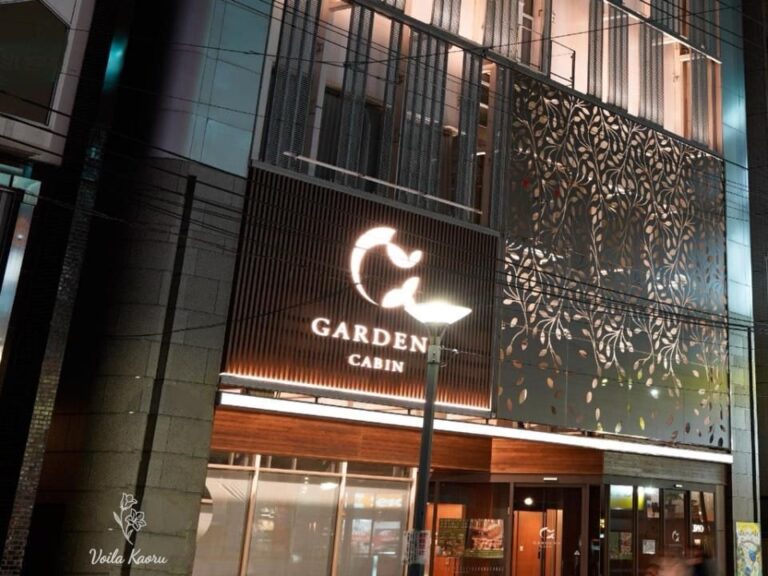
On my Sapporo stay, I chose Gardens Cabin and traveled with a 29-inch suitcase. That experience makes the final approach worth considering alongside the airport ride. My Gardens Cabin review explains the cabin setup and luggage storage if you are considering that stay.
For an address around Odori, put two complete options beside each other: train to Sapporo followed by the appropriate city connection, or a bus whose listed drop-off is convenient for the address. Check the walking route from each arrival point. Do not assume that a bus stop named after a nearby hotel provides a transfer to yours.
When a private transfer deserves a quote
Consider a private transfer when several people share the cost, your luggage makes changes difficult, or public transport does not fit your arrival. For one traveler with manageable bags and a convenient city stop, compare public transport first.
Disclosure: The following Klook link is an affiliate link. Ritaishare may earn a commission at no extra cost to you.
Compare New Chitose Airport private transfers on Klook.
Enter your exact address, arrival time, passenger count, and luggage before judging a quote. Check the meeting point, included waiting time, late-flight procedure, cancellation terms, and any extra charges. A vehicle’s passenger capacity does not establish how many large suitcases it carries. Check the total for your dates before paying.
Late flights, winter disruption, and the return journey
Check the last usable departure for your actual date and terminal, with time for arrival procedures and walking. If the connection only works when everything is on time, arrange a fallback before flying. On the return, work backward from your airline’s required airport arrival time; do not equate the train running time with the time needed to reach check-in.
JR’s disruption guidance warns that alternative transport can become crowded, delayed, or suspended too. Check station displays and each operator’s current information before switching modes. A bus or private car is not an automatic solution to a wider weather disruption.
For buses back to the airport, look up the airport-bound boarding point separately. It may differ from the place where you got off on arrival. Confirm that point and the relevant terminal before the day of departure.
For a simple decision, start with your address: JR for a convenient Sapporo Station arrival, a suitable bus when its stop meaningfully simplifies the last part, and a transfer quote when bags, timing, or group size justify it.